
Dr. Szerlip has joined forces with Austin Orthopedic Institute
Located at: 11675 Jollyville Road Suite 207, Austin, TX 78759
and 1410 Blue Ridge Dr. Ste 100, Georgetown, TX 78626
Call 512-856-1000 to request an appointment.
Platelet-rich plasma therapy (PRP) is a minimally invasive treatment that uses a patient’s own blood to create a concentrated preparation of platelets and growth factors. This preparation is then injected into an area being treated to support the body’s natural healing process.
Benjamin W. Szerlip, DO, a fellowship-trained shoulder and sports medicine surgeon, offers PRP treatment as part of his orthopedic and sports medicine care in Austin and Georgetown, Texas. Schedule your appointment today.
“Got checked in and into my appointment on time. Dr. Szerlip was prompt and very informative, while allowing any questions I may have had to be addressed while explaining my condition. He explained both a rotator cuff repair and a replacement for me to choose what will be best for me. He wasn’t trying to pressure me to choose without looking at both options. He was very supportive of the procedure I decided on and very supportive.” — Dale C.
Plasma is the liquid component of blood that carries the red blood cells, white blood cells, and platelets. Platelet-rich plasma (PRP) is plasma that has been modified to contain a higher concentration of platelets than normal blood. Platelets contain growth factors that promote tissue repair and control inflammation.
PRP is derived from a patient’s own blood, making it different from medications and treatments using donor material. This reduces the risk of allergic reactions compared to other injectable medications. PRP therapy is a minimally invasive treatment and can generally be done in an outpatient setting.
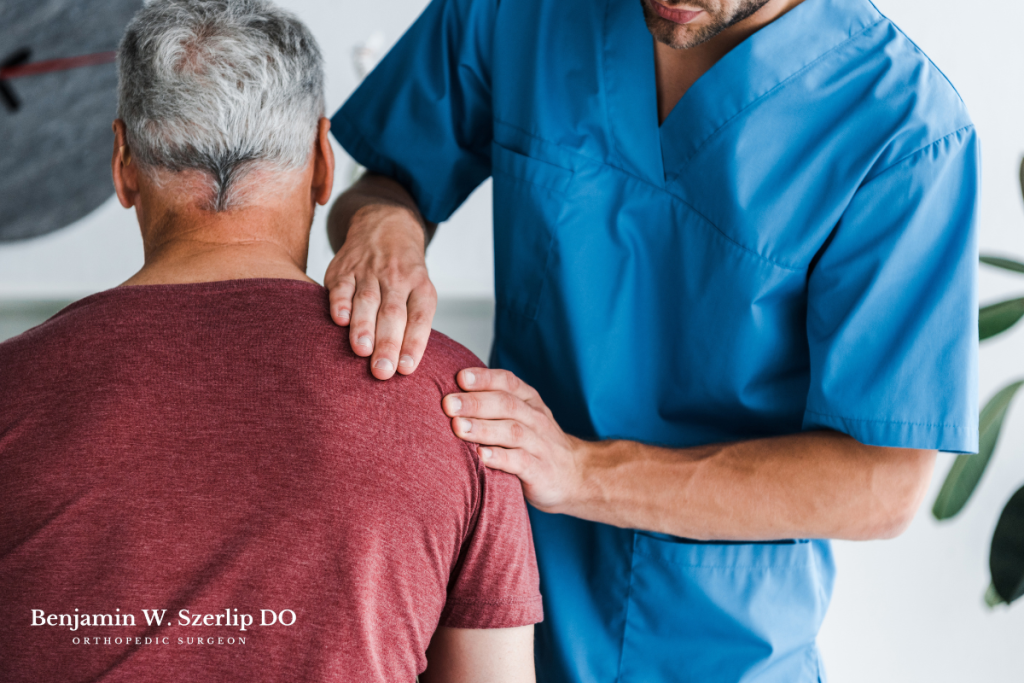
PRP injections are used in orthopedics and sports medicine for both acute and chronic musculoskeletal conditions.
Common conditions treated by PRP include the following:
Your condition, the symptoms, and overall health will be considered to determine whether you are a good candidate for PRP therapy. PRP is sometimes recommended to those who have unresolved pain following other treatments or certain chronic musculoskeletal conditions.
You may not be a good candidate if you have certain blood disorders or an active infection.
Your doctor will generally follow these steps when making the platelet-rich plasma:
The PRP preparation may vary depending on the injury being treated. Your provider may opt for leukocyte-poor PRP or leukocyte-rich PRP.
Preparing for PRP therapy can help you be better equipped for the procedure. Here are some of the things you can expect during PRP therapy.
Before you have PRP therapy, your doctor will want to evaluate your condition and see whether it is appropriate for you. You may need to adjust or stop certain medications before the procedure. Be sure to tell your doctor about all medications and supplements you take and follow their instructions.
On the day of the procedure, some blood will be taken to make the PRP preparation. Shortly after the solution is made, it will be injected into the area treated. The procedure is minimally invasive and can generally be performed in an outpatient setting.
Following the procedure, you may experience some bruising and soreness at the injection site. Some patients report feeling a little light-headed following the blood draw. You may be recommended to carry out physical therapy to continue making improvements in your recovery.
There is no single number of PRP injections that applies to every patient. Your doctor will evaluate your condition, the severity, and your response to the first treatment.
The goal of PRP therapy is to support the body’s healing process and potentially improve symptoms and function. The growth factors within the platelets are key to tissue repair and healing.
However, each patient may respond differently, and the effectiveness of PRP can vary depending on the condition being treated and other individual factors.
PRP therapy can provide some benefits over traditional treatments. The benefits include the following:
PRP uses concentrated platelets from the patient’s own blood, while cortisone injections use a corticosteroid medication. PRP therapy supports healing through the activity of platelets and their growth factors.
Corticosteroid injections are commonly used to reduce inflammation and provide relief from symptoms. The injection suited to you will depend on your underlying condition and treatment goals.
While platelet-rich plasma therapy is generally safe, some patients may experience minor side effects. Potential side effects for PRP therapy include the following:
Because PRP is derived from your own body, there is a lower risk of an allergic reaction. Still, PRP may not be suitable for individuals with bleeding disorders, active infections, or low platelet counts. Dr. Szerlip will perform a thorough evaluation to determine if you’re a good candidate for this treatment.
If you’re dealing with pain, limited mobility, or a sports-related injury, platelet-rich plasma therapy may help you get back to living your life faster and with less pain. At our Austin and Georgetown clinics, Dr. Benjamin W. Szerlip, a fellowship-trained shoulder and sports medicine surgeon, offers comprehensive care using the latest regenerative techniques.
Schedule your consultation today to see if PRP treatment is the right fit for your healing journey.
Platelet-rich plasma therapy is a procedure where your own blood is used to make a concentration of platelets in plasma. These platelets contain growth factors that support healing.
PRP injections can treat musculoskeletal conditions such as osteoarthritis, tennis elbow, and jumper’s knee.
PRP injections are prepared from a draw of your own blood. The sample is put in a centrifuge where the platelets are separated from the other cells.
This will depend on factors such as your condition, its severity, and how you respond initially to the treatment.
There may be some soreness or bruising at the injection site following a PRP injection.
Dr. Szerlip has joined forces with Austin Orthopedic Institute
Located at: 11675 Jollyville Road Suite 207, Austin, TX 78759
and 1410 Blue Ridge Dr. Ste 100, Georgetown, TX 78626
Call 512-856-1000 to request an appointment.