
Dr. Szerlip has joined forces with Austin Orthopedic Institute
Located at: 11675 Jollyville Road Suite 207, Austin, TX 78759
and 1410 Blue Ridge Dr. Ste 100, Georgetown, TX 78626
Call 512-856-1000 to request an appointment.
Knee and shoulder trauma can range from minor to severe. Some cases need surgery, and all injuries benefit from a structured rehabilitation program. This is the safest way to return to daily activities and sports.
If you are looking for treatment and rehabilitation for knee and shoulder injuries, then contact Dr. Benjamin W. Szerlip in Austin or Georgetown, Texas. He is a fellowship-trained shoulder and sports medicine surgeon with many years of experience in treating these types of injuries.
“Great staff at reception area. Very pleasant and professional medical staff. Wait time was appropriate. I appreciate Dr. Szerlip’s approach. He answered all my concerns. I’ll continue to receive steroid injections as long as they’re helpful. Then will work to create a plan to maintain my shoulder function. So, no complaints.” — Gretchen H.
Physical trauma is defined as a serious, sudden injury to the body caused by an external force. This force can be caused by falls, sports injuries, or other accidents. The resulting trauma can cause various types of injuries to the body, including broken bones, muscle and ligament strains, ligament sprains, dislocations, and other soft tissue injuries.
Trauma patients often require immediate medical help. Following initial treatment, the patient will need to follow specific rehabilitation protocols to safely return to sports and activity.
Many different types of traumatic injury can affect the shoulder joints. Most shoulder injuries occur while playing sports or from other trauma incidents. While some can be treated using just a sling or shoulder immobilizer, others may require surgery. Here are some common shoulder injuries:
Three bones can fracture in your shoulder: your collarbone (clavicle fractures), upper arm bone (proximal humerus fracture), and shoulder blade (scapula fractures). Shoulder fractures are usually a result of a high-impact injury, such as in a sports or motor vehicle accident.
Shoulder dislocations can also occur in high-energy trauma incidents, such as a fall or heavy blow. Dislocation can affect the glenohumeral joint when the humeral head comes out of the shoulder socket. The other two joints of the shoulder can also dislocate.
This refers to a dislocation of the acromioclavicular joint (collar bone joint with the scapula). This type of injury is also known as a separated shoulder. Severe shoulder separations often require surgery.
The rotator cuff is a group of four muscles that come together as a tendon and wrap around the humeral head. Injuries can occur from falling on an outstretched arm and often happen at the same time as dislocations or collarbone fractures.
The labrum is a soft fibrous tissue that helps deepen the ball-and-socket joint of the shoulder. A SLAP (Superior Labrum, Anterior to Posterior) tear refers to a tear in the upper part of the labrum. A Bankart lesion is a tear in the front and bottom of the shoulder socket, usually caused by dislocation.
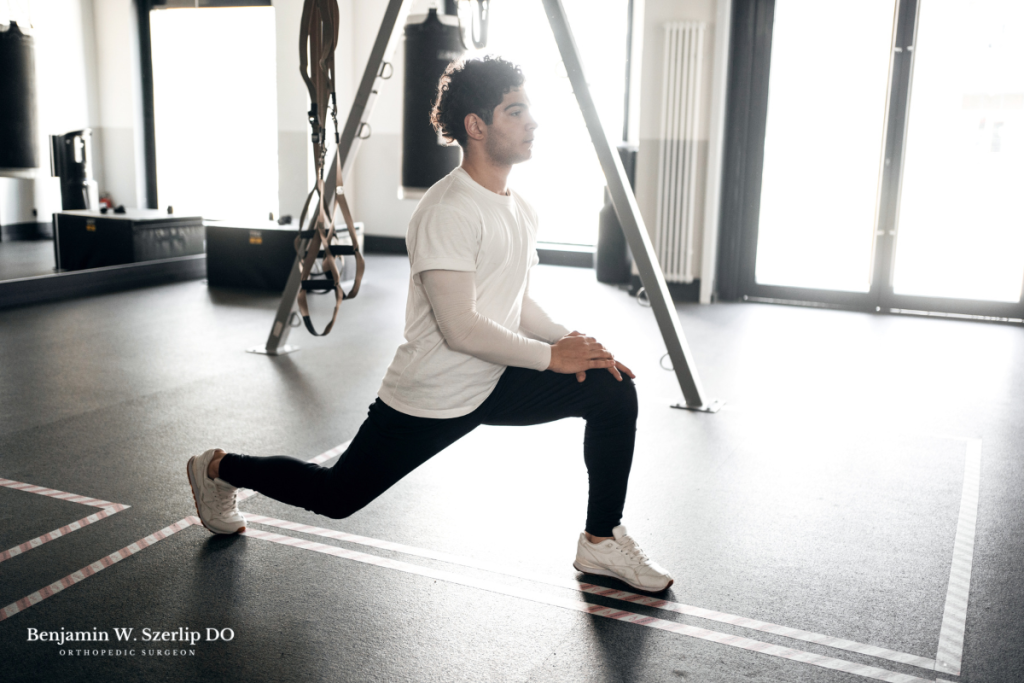
The knee joint is made up of the knee bones, muscles, tendons, ligaments, and cartilage. Each of these can be injured through trauma, resulting in knee pain. Common knee injuries include the following:
Four ligaments hold the bones together at the knee. Traumatic injury can result in partial tears or complete ruptures. There are cruciate ligament injuries and collateral ligament injuries:
The meniscus is a C-shaped rim of cartilage that act as shock absorbers for the knee. Sudden twists or changes in direction can cause a meniscus tear.
A displaced tibial plateau fracture affects the upper part of the shinbone that makes up part of the knee joint. It is usually caused by high-impact trauma.
A patellar tendon tear can refer to the overstretching or tearing of the tendon that connects the kneecap to the shinbone. This often occurs during jumping or sudden movements.
A quadriceps tendon tear refers to a tear in the tendon that connects the thigh muscle to the kneecap.
At his Austin and Georgetown practices, Dr. Benjamin W. Szerlip offers a wide range of non-surgical and surgical treatments tailored to your condition and lifestyle. As a fellowship-trained shoulder and sports medicine surgeon, he provides advanced solutions for both shoulder and knee conditions. Following a physical examination and imaging testing, he can determine the best treatment plan for your recovery goals.
Dr. Szerlip provides the following shoulder treatments:
Dr. Szerlip provides the following knee treatments:
Dr. Szerlip provides the following treatments for other injuries
Following the initial treatment, we can provide physical therapy to help you return to everyday activities and sports. Rehabilitation is important to build back the strength and prevent future recurring injuries.
If you’re looking for trauma treatment, then contact Dr. Benjamin Szerlip in Austin or Georgetown, Texas. As a fellowship-trained shoulder and sports medicine surgeon, he can provide the necessary treatment and rehabilitation you need to get back to the activities you love.
Physical trauma refers to a sudden injury caused by an external force, such as a fall, sports injury, or accident. Trauma can lead to fractures, ligament injuries, muscle strains, dislocations, and other soft tissue damage that may require medical treatment and rehabilitation.
Common shoulder injuries include clavicle fractures, proximal humerus fractures, shoulder dislocations, AC joint separations, rotator cuff tears, and labral tears such as SLAP tears and Bankart lesions. These injuries often occur during sports or high-impact accidents.
Traumatic knee injuries commonly include ACL tears, PCL injuries, MCL and LCL tears, meniscus tears, tibial plateau fractures, patellar tendon tears, and quadriceps tendon tears. Many of these injuries result from twisting motions, sudden direction changes, falls, or direct impact.
Surgery may be recommended when injuries are severe, unstable, or unlikely to heal properly with conservative treatment alone. Examples include displaced fractures, complete ligament tears, tendon ruptures, severe shoulder separations, and certain labral or meniscus injuries.
Rehabilitation helps restore strength, flexibility, balance, and mobility after injury or surgery. Physical therapy also reduces the risk of recurring injuries and helps patients safely return to sports, work, and daily activities.
Dr. Szerlip has joined forces with Austin Orthopedic Institute
Located at: 11675 Jollyville Road Suite 207, Austin, TX 78759
and 1410 Blue Ridge Dr. Ste 100, Georgetown, TX 78626
Call 512-856-1000 to request an appointment.